
-Not one mentioned salary.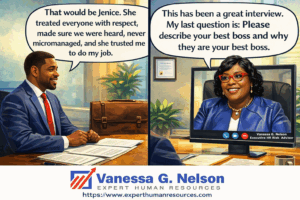
-Not one mentioned benefits.
-Not one mentioned perks.
After 16 years and hundreds of interviews, the pattern was undeniable.
Here’s what they said instead:
“He treated everyone with respect and dignity.”
“She never micromanaged — she trusted me to do my job.”
“He would walk up and shake your hand. It was easy to breathe around him.”
“She mentored me and believed in me.”
“He made sure you were heard.”
Real people. Real interviews. Real answers.
No one was describing a compensation package.
They were describing how someone made them feel at work.
And here’s what happens when leadership gets this wrong.
The average cost to replace one employee is 50–200% of their annual salary.
But the real damage shows up long before someone quits.
I’ve walked into organizations where talented people were quietly disengaging, grievances were building, and leadership had no idea the clock was already ticking.
Eventually it shows up as:
• Turnover
• Employee relations issues
• Workplace investigations
• Wrongful termination claims
• Culture problems that suddenly become very expensive
And after conducting HR audits for more than 16 years, I can tell you something with certainty:
The root cause is almost never the market.
Not the economy.
Not even the employees.
It’s leadership.
The encouraging part?
The employees I interviewed didn’t have a complicated wish list.
They wanted to be trusted.
They wanted to be heard.
They wanted to be respected.
They wanted to grow.
The leaders who understand that don’t just retain great people.
They build organizations that are extremely difficult to compete with.
And when organizations start seeing higher turnover, disengagement, or an increase in HR issues, that’s usually where my work begins — helping leaders understand what’s really happening beneath the surface.
One question I’ll leave you with:
Think about the best boss you ever had.
What made them different?